Education
Illinois Groups Sue US Department of Education After $18M in Grants Cut in Middle of School Year
Students at 32 Illinois Full-Service Community Schools returned from winter break to major changes, after 708 school programs were discontinued and 277 staff were laid off beginning in mid-December.
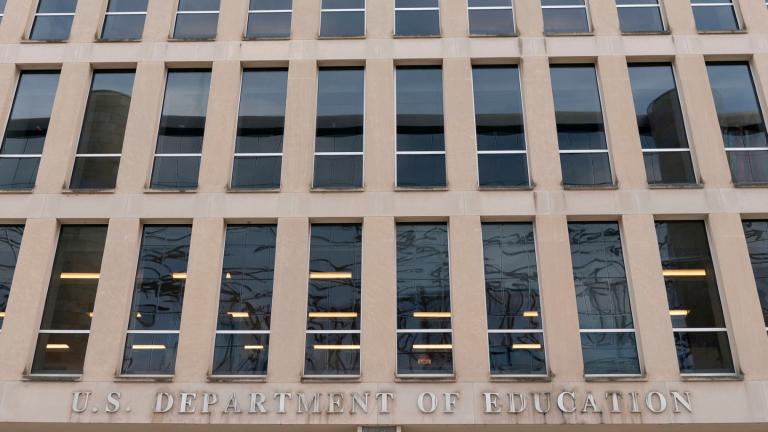
The cuts followed the U.S. Department of Education’s termination of $168 million in federal grant funding for Full-Service Community Schools, or FSCS.
ACT Now, which provides school programming across Illinois, was slated to receive $18 million in 2026 and $37 million over the next two years. ACT Now has filed a federal lawsuit against the Department of Education, arguing the grants were illegally discontinued.
“This action challenges an unprecedented and unlawful decision … to discontinue two previously awarded, multi-year federal grants based not on grantee performance, statutory criteria or regulatory standards, but on perceived misalignment with the current Administration’s policy preferences and priorities,” the suit reads.
ACT Now sought a temporary restraining order on the grant cuts, which could have kept funding flowing temporarily. That request was denied.
ACT Now Executive Director Susan Stanton said the organization has received no explanation from the Department of Education or the Trump administration for the cuts.
“We still don’t have very definitive reasons as to what happened,” Stanton said. “The grants were terminated without citing any specific activities we participated in or what we would’ve violated.”
A Department of Education official, Madi Biedermann, wrote that the funds were being reinvested into programs that better align with Trump administration priorities, arguing that FSCS programs foster DEI principles.
“The Trump administration is no longer allowing taxpayer dollars to go out the door on autopilot — we are evaluating every federal grant to ensure they are in line with the Administration’s policy of prioritizing merit, fairness and excellence in education,” Biedermann wrote.
Biedermann wrote that some FSCS programs use “overt race preferences.”
The Brighton Park Neighborhood Council, which uses FSCS grants for programming at Curie Metro High School on Chicago’s Southwest Side, has filed its own lawsuit.
The council is arguing that, because the funds have already been appropriated by Congress, they cannot be unilaterally discontinued in the middle of the school year.
BPNC Executive Director Patrick Brosnan said the Trump administration is free to change grant standards, but should adhere to the typical process for doing so.
“If the administration wants to change priorities in the future, they can work with Congress or change the rules,” Brosnan said. “They didn’t do either.”
Brosnan also rebuked the racial preference allegations made by the Department of Education. Brosnan said the department approved BNPC’s program plan with the grant and that the organization has remained in full compliance.
“(Curie) serves Latino students, it serves Black students, it serves Asian students, it serves White students,” Brosnan said. “Every student at Curie is eligible for these programs. … We just don’t understand what the administration is saying when it makes its claim.”
Brosnan said 500 Curie students were enrolled in programs reliant on grant funding, including ACT prep, mentoring and tutoring, civic leadership training, STEM training and English-language learning. Without continued federal funding, BNPC will have to look elsewhere to keep programming going.
“There are not a lot of resources right now,” Brosnan said. “That’s why these grants are so important.”
The Department of Education told ACT Now it is willing to negotiate and revisit the FSCS grant, Stanton said. Those talks have not yet begun, and ACT Now is considering further legal action.